University of Minnesota 1924-1925


President’s Report – U of Minnesota, 1924-1925

‘Research in Progress’ – U of Minnesota, 1924-1925


Sorokin taught at the University of Minnesota from 1924 to 1929. Posted here are:

President’s Report, University of Minnesota 1924-1925

Research in Progress, University of Minnesota. 1924-1925

detailing the writings and research activities of Sorokin, his collaborator Carle C. Zimmerman, and Sorokin’s wife, Helen Sorokin.

— posted by Roger W. Smith

     August 2024

Sorokin, Preface to “Social Mobility”


‘Social Mobility’ – Preface, etc


Posted here (PDF above):

Editor’s Introduction (by F. Stuart Chapin)

Sorokin’s Preface

Pitirim Sorokin, Social Mobility, New York: Harper & Brothers, 1927


— posted by Roger W. Smith

     June 2024

Herbert Hoover letter to Sorokin


Herbert Hoover to Sorokin 2-2-1926


Posted here as a Word document: a letter from Herbert Hoover, then Secretary of Commerce, to Sorokin, dated February 2, 1926.

— posted by Roger W Smith

     April 2024


Sorokin’s letter to Lenin


dated December 4, 1918

English translation by Roger W. Smith and Natalia Sergieva


letter to Lenin RUSSIAN

letter to Lenin ENGLISH


See Word documents above.


– posted by Roger W. Smith

   March 2024


“He is to me like God,” wrote an awestruck Freshman.


Faculty Profile (Fadiman) – Harvard Crimson 4-22-1941


Posted here (Word document above) is the following article about Sorokin:

“Faculty Profile”

The Harvard Crimson

April 22, 1941


– posted by Roger W Smith

     March 2023

a visit to 8 Cliff Street


On May 24, 2017, on a trip to Massachusetts, I made a stop in Winchester (a town near Cambridge), where Pitirim A. Sorokin, his wife Elena, and their sons lived. Both of Sorokin’s sons graduated from Winchester High School.

I know the area well, having grown up in Cambridge. My father grew up in nearby Arlington. A musician and piano teacher, he had many piano students in Winchester and was involved in musical productions there.

Sorokin and family resided at 8 Cliff Street in Winchester.

I was interested not only to see the residence of a world renowned scholar and writer, but also to see the house because it was famous for its grounds: a garden developed and maintained by Sorokin himself, for which he had won awards from horticultural societies and of which he was proud.

I drove up the block, which was on a steep ascent, using GPS to guide me. The GPS system advised me that I had arrived at my destination, 8 Cliff Street, on my left. I saw 6 Cliff Street, but where was number 8? Number 8 was shrouded and hidden by a profusion of flowering bushes. It reminded me of the Forest of Thorns in “Sleeping Beauty.”


‘Winchester Hillside Aglow with Azaleas’ – Boston Globe 5-23-1954


— posted by Roger W. Smith

      February 2024


*****************************************************

Pitirim A. Sorokin residence, 8 Cliff St., Winchester, MA. Photographs by Roger W. Smith

Yuri Doykov, ” ‘Modern Thought of P. A. Sorokin”


Yuri Doykov, ‘Modern Thought of P. A. Sorokin’


posted here (PDF above)

Yuri Doykov

” ‘Modern Thought of P. A. Sorokin”

Arkhangelsk, 1995

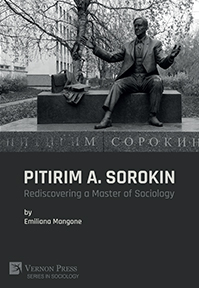
Pitirim A. Sorokin: Rediscovering a Master of Sociology


The following monograph has just been published:

Pitirim A. Sorokin: Rediscovering a Master of Sociology

by Emiliana Mangone

Vernon Press, 2023

More information is available at

https://vernonpress.com/book/1812


The following is a synopsis by Olga A. Simonova, Academic Supervisor of the School of Sociology at the National Research University, Higher School of Economics, Moscow, Russia:

This book is a historical and sociological study of the ideas of the outstanding Russian American sociologist Pitirim Sorokin. In a relatively small book (which is its undoubted virtue), his ideas are presented in a clear manner, along with biographical facts. The book consists of three parts and eight chapters. At the beginning, we are introduced to a biographical lapidary sketch, which the author justifiably divides into two main parts – the Russian period and the American period, which is not a simplification but makes the perception of the development of the social thinker’s ideas clearer and more coherent. Then some works of the American period are disclosed, including very controversial ones, including the general theory of socio-cultural dynamics by Sorokin, which is one of the most important theories of cultural development in the twentieth century. In the third part, the author considers Sorokin’s ideas, first of all, those of altruistic love, in the context of global problems, conflicts, and catastrophes.

The book is valuable for the younger generation of sociologists, as it addresses the rediscovery of the ideas of the classic sociology, which have been undeservedly forgotten or ignored in research and publications. In this way, the book contributes to the continuity of sociological theory and sociological education. Today Sorokin’s ideas have become relevant and even topical again since Sorokin, as the author points out, was formed as a scholar in an era of social upheaval in Russia and became a prominent theorist of revolution and

humanitarian catastrophes and at the same time a scholar who passionately sought a way out of the crisis of modern civilization through a revival of altruism and brotherly love. Throughout the book Emiliana Mangone solves several sociological “puzzles”: why the Russian-born social thinker had such an impressive career, why he remained a “stranger” in American sociology, why he turned to “positive” social phenomena – solidarity, altruism, brotherly love, friendship, the revival of spiritual values – even though he witnessed dramatic social and political events.

The book is a truly fundamental study – it fully and clearly presents Sorokin’s theory and methodology in the form of an integral picture of culture and society and a mixed integral method of research, establishes the connection between Sorokin’s ideas and other sociological traditions, reveals interesting biographical facts (in particular, in a very interesting chapter on Sorokin and Talcott Parsons’s relations, which are considered not in terms of sympathy and antipathy but in terms of development of sociological knowledge and institutionalization of the discipline), and is based on the most important sources on Sorokin’s work.

The author of the folio observes all the norms of academic ethics and neutrality, so the book is genuinely interesting. Much about Sorokin’s work and his biography is already known, but the book is of interest to Russian researchers, too, who often miss the details of the American period of his career. The fundamental novelty of this book is the consideration of Sorokin’s work in the contemporary global context – global crises, epidemics, and war, which is obviously necessary for all and not only for sociologists.
National Council of American-Soviet Friendship, “Open Letter to the American People on American-Soviet Friendship”


Corliss Lamont, ‘Open Letter’ (2)


Posted here:

Open Letter to the American People on American-Soviet Friendship

Introduction by Corliss Lamont

New York: The National Council of American-Soviet Friendship, 1943

Sorokin was one of the signers. His Russia and the United States was published in 1944.

Corliss Lamont (1902-1995) was an American socialist and advocate of various left-wing and civil liberties causes. He was Chairman of The National Council of American-Soviet Friendship, which was founded in 1943.


— posted by Roger W. Smith

      May 2023

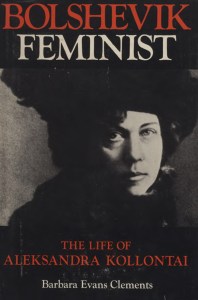
Bolshevik Feminist


from Barbara Evans Clements, Bolshevik Feminist: The Life of Aleksandra Kollontai (Indiana University Press, 1979), pp. 117-118:

Kollontai’s political fortunes rose with those of the Bolsheviks. At the Sixth Party Congress in late July, while she sat in jail, she became the first woman elected to the Central Committee, polling the sixth highest vote. In nominating her a Bolshevik candidate to the Constituent Assembly, Stalin placed her fifth on the list, after Lenin, Zinoviev, Trotsky, and Lunacharskii. When she was released from prison, Proletarii, the party newspaper, welcomed her back by declaring: “Greetings to the fighter, returned to our ranks.” Requests came in to the Petrograd offices for her pamphlets, and colleagues acknowledged her as one of their best orators. Pitirim Sorokin, a Socialist Revolutionary who was later to become an eminent sociologist, wrote after losing a debate with her:

As for this woman, it is plain that her revolutionary enthusiasm is nothing but a gratification of her sexual satyriasis [sic]. In spite of her numerous “husbands,” Kollontai, first the wife of a general, later the mistress of a dozen men, is not yet satiated. She seeks new forms of sexual sadism. I wish she might come under the observation of Freud and other psychiatrists. She would indeed be a rare subject for them. [Pitirim A. Sorokin, Leaves From a Russian Diary (Boston: Beacon Press, 1950), p. 59]

Sorokin’s anger at Kollontai and the Bolsheviks’ admiration for her sprang from the same source—Kollontai’s talent as a speaker. She had never been more effective in presenting Bolshevik demands for “peace, bread, and land” and “all power to the soviets.” Bolshevik popularity was greater than ever before, and Kollontai, buoyed by sympathetic audiences and by her party’s success, rushed happily from meeting to meeting. Her speeches, she felt, “expressed the general striving, the united mass will,” of the crowds who shared her radicalism. The final push by the people toward freedom and community had begun. Both then and later, Kollontai hailed the spontaneity of the revolution. She attributed the party’s success to the fact that it simultaneously expressed the will of the people and led their historically determined march.

— posted by Roger W. Smith

     May 2023