“Men cannot be treated like mice and guinea pigs.”


Before accepting a position in the sociology department at the University of Minnesota, Pitirim A. Sorokin was a guest of Vassar College, where he gave lectures.

The following article appeared in the Vassar Miscellany News, March 18, 1931: “Scintillating Selz Sends in Successful Solutions”

The article noted that Katherine Selz ’31 was the winner of the college’s Chat Current Events contest.

The prize-winning answers included the following:


“Who said:

Q. ‘Men cannot be treated like mice and guinea pigs’?

A. Mr. Sorokin”


*****************************************************

This squib provides a revealing glimpse of Sorokin: the provocative lecturer and a sociologist who was firmly against what he called quantophrenia. And insight into what was Sorokin’s humanistic conception of sociology.


— posted by Roger W. Smith

      March 2019

“a mysterious mixture of crackpot and genius”


“Harvard’s Pitirim Sorokin, 66, a Russian artisan’s son who became the first professor of sociology at the University of St. Petersburg and later at Harvard. Brash, brilliant young Sorokin ran away from his father at the age of nine (“My father was good man, except when he was drunk”), managed to get himself enough education to enter the University of St. Petersburg. A social revolutionary, he was arrested three times by the Czarist police, served as one of Kerensky’s secretaries, was later arrested three more times by the Communists. Exiled in 1922, he soon came to the U.S., and with the publication of his monumental Social and Cultural Dynamics, a study of the fluctuations of “sensate” and “ideational” cultures, he set the academic world to wondering whether it had found a new Spengler. Today, a mysterious mixture of crackpot and genius, Pitirim Sorokin has his colleagues wondering still.”

— ‘Goodbye, Messrs. Chips,” Time, June 27, 1955, pp. 59-60


*****************************************************


Time magazine, it should be noted, was known and often parodied for its glib, snarky style.


— posted by Roger W. Smith

     February 2019

a Sorokin nemesis (Porter Sargent on Sorokin)


Caustic without being bitter is Boston’s white-thatched, bow-tied Porter Sargent. The saltiest commentator on U. S. education, from which he makes his living but for which he has a certain amused contempt, Porter Sargent prefaces his famed annual catalogue of 4,000 private schools with his shrewd opinions on men and affairs. Last week, in the 22nd edition of his Handbook of Private Schools, he threw most of his custard pies at the two most popular favorites of U. S. higher education —President James Bryant Conant of Harvard and President Robert Maynard Hutchins of University of Chicago.

President Conant, glooms Porter Sargent, started out as Harvard’s head “with the naivete and boldness of a scientist,” but soon “sacred cows were jostled” and today Conant has subsided “to the dead level of mass alumni opinion.” Sprightly, 66-year-old Porter Sargent criticizes President Conant most severely for keeping as head of Harvard’s sociology department Pitirim Alexandrovitch Sorokin, whom he calls a pseudo-scientist, a defeatist and a reactionary. “Harvard is maintaining him in a position of influence where he is misguiding and frustrating American youth. . . . The sociology department is the White Russian WPA.”

— “Plain Talker.” Time, May 30, 1938, pg. 39


*****************************************************

Porter Sargent (1872–1951) was a prominent educational critic/gadfly and founder of Porter Sargent Publishers. In 1949, he was described in an article in the Journal of Higher Education as “probably the most outstanding and consistent critic of the American educational scene.”


— posted by Roger W. Smith

     February 2019

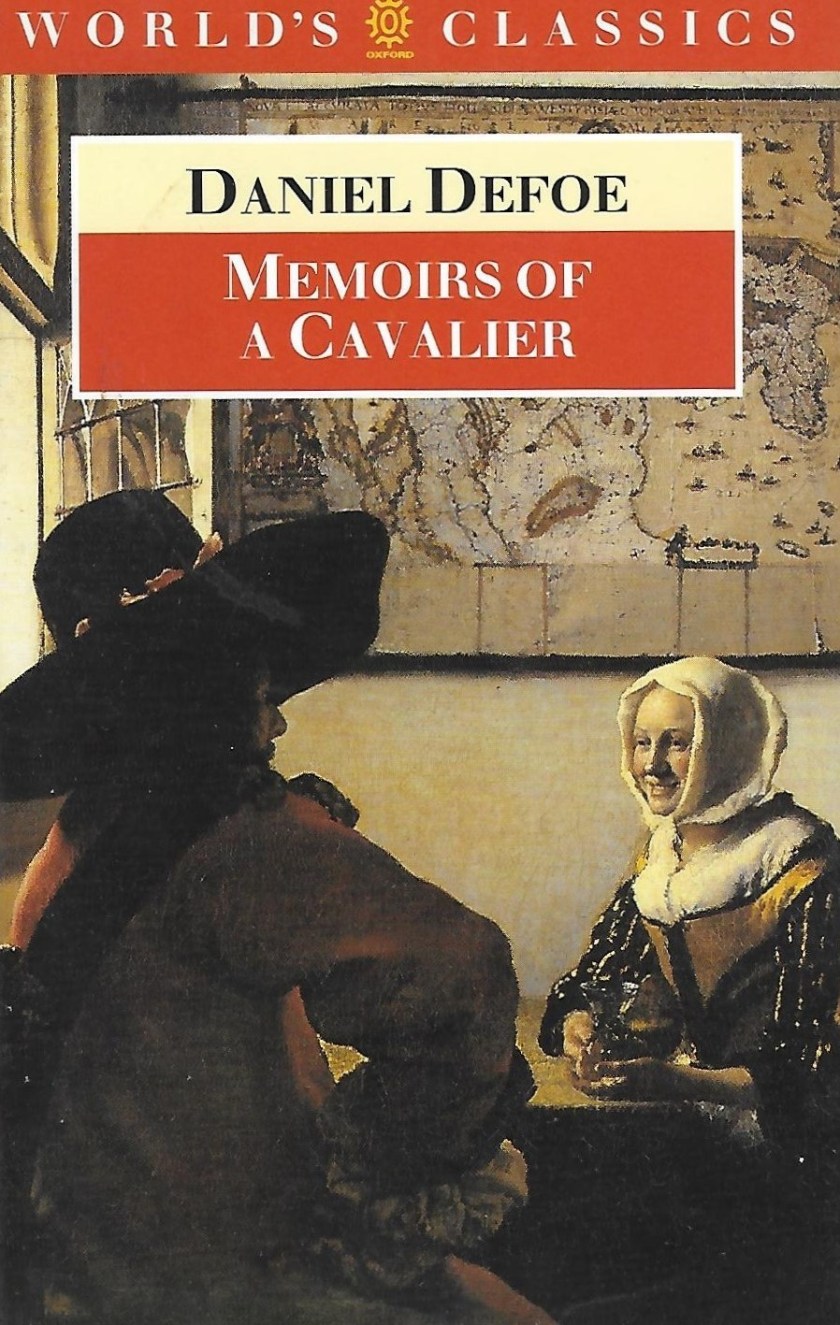
Sorokin and Defoe (and Winston Churchill)


imageedit_1_2520341161.jpg


Daniel Defoe’s customary skill as a writer was to speak in the voices of others. His novels are only the most famous examples of the first-person accounts, memoirs, and polemics that he fabricated throughout his career. Memoirs of a Cavalier is a special example because it took the pursuit of authenticity–which is the standard of all Defoe’s novels–to its limits. So successfully did it mimic the voice of the seventeenth-century soldier of fortune who is its narrator, that for over half a century the memoirs were considered to be genuine. The struggle of this narrator to turn his observations into facts, to make a certain history of his uncertain experiences, was so well caught that, as one of its eighteenth-century editors declared, “tis a Romance the likest to Truth that I ever read’. It is this struggle, as much as the battles and adventures which comprise the Cavalier’s story, that gives this narrative its dramatic qualities.

— back cover copy; Daniel Defoe, Memoirs of a Cavalier, or a Military Journal of the Wars in Germany, and The Wars in England; From the Year 1632, to the Year 1648 (World’s Classics Edition; Oxford University Press 1991)


*****************************************************

In my post

“Sorokin” (“Сорокин”)

Roger W. Smith, “Sorokin (Сорокин)”

I wrote:

“Leaves from A Russian Diary,” which details Sorokin’s experiences as a revolutionary opponent of the Czarist government, an official in the short lived Kerensky government, and an anti-Bolshevik, was a work that I could not put down. It has a cogency and dramatic interest, being written at white heat, so to speak, that make it compelling. It reads live a novel, a sort of “Les Misérables” minus about a thousand pages. l feel that it is an underrated book and could never understand why it never achieved a wide readership. For me, it is the best book on the Russian Revolution, the only one I practically ever read about it, in fact. It made me feel what the revolution must have been like. I regard it as a classic, and I felt it was very well written, much more so than when Sorokin was writing as a scholar.

The analogy to Defoe, applied to Sorokin’s reminiscences of the February Revolution and it’s immediate aftermath, is very apt. I am happy to say that I have just recently interested a literarily minded friend in reading Leaves from a Russian Diary, a book I couldn’t put down.


*****************************************************


In his preface to The Second World War: The Gathering Storm (Boston: Houghton Mifflin Company, 1948), Winston S. Churchill wrote:

I have followed, as in previous volumes, as far as I am able, the method of Defoe’s Memoirs of a Cavalier, in which the author hangs the chronicle and discussion of great military and political events upon the thread of the personal experiences of an individual. I am perhaps the only man who has passed through both the two supreme cataclysms of recorded history in high Cabinet office. Whereas, however, in the First World War I filled responsible but subordinate posts, I was for more than five years in this second struggle with Germany the Head of His Majesty’s Government. I write, therefore, from a different standpoint and with more authority than was possible in my earlier books.

Precisely the same as Leaves from a Russian Diary. Both Sorokin and Churchill were participant-observers.


— Roger W. Smith

     February 2019

Sorokin sites


Visitors to this site will be interested to know of the following sites devoted to Pitirim A. Sorokin:


Pitirim A. Sorokin Foundation (USA)


http://cliffstreet.org/


The Pitirim A. Sorokin Foundation (in Russian)


http://pitirim.org/


This Russian site is maintained by Александр Долгов (Aleksandr Dolgov). Aleksandr and his site are on Facebook.


Фонд Питирима Сорокина / Pitirim A. Sorokin Foundation

Facebook

https://www.facebook.com/pitirim.sorokin.foundation/


— Roger W. Smith


     July 2018; updated December 2020

Carle C. Zimmerman, “Sorokin, The World’s Greatest Sociologist”


Carle C. Zimmerman, ‘Sorokin; The World’s Greatest Sociologist’


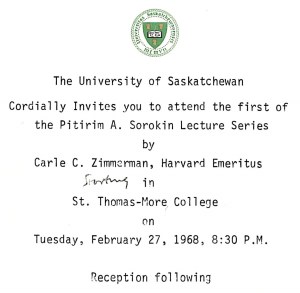
Posted above as a downloadable PDF file is the inaugural Annual Sorokin Lecture, which was presented by Pitirim A. Sorokin’s friend and former colleague, the sociologist Carle C. Zimmerman, at the University of Saskatchewan in 1968.

The University of Saskatchewan is a main repository of materials from the personal library of Sorokin, including letters, notebooks, photographs, books, original and revised manuscripts, Sorokin’s works in translation, and book reviews. The university holds an annual lecture in Sorokin’s honor, with the most recent lecture, in the 49th in the series, having been given in January 2018.


*****************************************************

The PDF file posted above contains the complete text of:

“Sorokin, The World’s Greatest Sociologist: His Life and Ideas on Social Time and Change”

Sorokin Lectures No. 1

delivered by Carle C. Zimmerman

University of Saskatchewan

Saskatoon, Saskatchewan, Canada

1968


posted by Roger W. Smith

      June 2018

photographs of Turya, Russia; Pitirim A. Sorokin’s birthplace … фотографии Туря, Россия; Место рождения Питирима А. Сорокина


1
с. Туръя, Церковь Воскресения Христова (1860 г)
2.jpg
ӧшкамӧшка / радуга над д. Жигановка за р. Вымь
3.jpg
вид на д.Жигановка на р.Вымь

4

5.jpg
неутомимый Женя Худин спускает “судно” на воду
6.jpg
…в поисках “фарватера” через заросшие протоки к большой Выми

7.jpg

8.jpg


*****************************************************


These photos were posted on Facebook by Valery E. Sharapov on May 29, 2018. They are posted here courtesy Mr. Sharapov.

Pitirim Alexandrovich Sorokin was born on 2 February (O.S. 21 January) 1889, in Turya, a small village in Yarensk uyezd, Vologda Governorate, Russian Empire (now Knyazhpogostsky District, Komi Republic, Russia).


Эти фотографии были размещены на Facebook Валерием Шараповым 29 мая 2018 года. Они размещены здесь любезно г-ном Шараповым.

Сорокин Питирим Александрович родился 2 февраля [O.S. 21 января] 1889 года, в Турии, маленькой деревне в Яренском уезде, Вологодской губернии, Российской империи (ныне Княжпогостский район, Республика Коми, Россия).


— Roger W. Smith

      May 2018

seeking translator for Sorokin biography / ищет переводчика для биографии Сорокина


Yuri Doykov, an independent journalist and historian based in Arkhangelsk, Russia has written several important books on Sorokin, including his two-volume biography Питирим Сорокин: Человек вне сезона (Pitirim Sorokin: A Timeless Man, 2008-2009).

Doykov’s work is the first real biography of Sorokin.

In 1996, the University Press of Kansas published Barry V. Johnston’s Pitirim A. Sorokin: An Intellectual Biography. The work is a valuable contribution to Sorokin studies, but it is not strictly a biography.

Given that most of Sorokin’s career was spent in the United States (and not minimizing the importance of his Russian years), it would be a great service to sociologists and social scientists in related fields to be have an English translation of Doykov’s biography available.

We are seeking responses from Russian scholars who would be willing to undertake a translation into English. Roger W. Smith is prepared to assist in preparation of the translation. While he is not qualified to undertake it himself, he has a working knowledge of Russian and professional editorial experience which would enable him to assist a translator and make the translation letter perfect in English.

We invite responses to either


Yuri Doykov

ydoikov@yahoo.com

or

Roger W. Smith

brandeis106@gmail.com


*****************************************************


Юрий Дойков, независимый журналист и историк из Архангельска, написал несколько важных книг о Сорокине, в том числе его двухтомную биографию: Питирим Сорокин. Человек вне сезона (2008-2009).

Работа Дойкова – первая настоящая биография Сорокина.

В 1996 году университетская пресса Канзаса опубликовала «Питирим А. Сорокин» Барри В. Джонстона: «Интеллектуальная биография». Работа является ценным вкладом в исследования Сорокина, но это не совсем биография.

Учитывая, что большая часть карьеры Соркина проводилась в Соединенных Штатах (и не сводя к минимуму важность его российских лет), это было бы отличным сервисом для социологов и социологов в смежных областях, чтобы иметь английский перевод биографии Дойкова.

Мы ищем ответы от российских ученых, которые хотели бы взять перевод на английский язык. Роджер У. Смит готов помочь в подготовке перевода. Несмотря на то, что он не имеет возможности самостоятельно заниматься этим, он имеет опыт работы с русским и профессиональным редакционным опытом, который позволил бы ему помочь переводчику и сделать переводное письмо совершенным на английском языке.

Мы приглашаем

Юрий Дойков

ydoikov@yahoo.com

или

Roger W. Smith

brandeis106@gmail.com


*****************************************************


Pitirim Sorokin: A Timeless Man


Contents

Volume 1

Chapter 1 Life of Sorokin before the First World War. 1889-1916

Chapter 2. Participation of Sorokin in the Russian Revolution and the Struggle against the Bolsheviks 1917-1918

Chapter 3 Sorokin’s work at Petrograd University and expulsion from Soviet Russia
on the orders of Lenin and Trotsky. 1919-1922


Volume 2

Chapter 1 Life of Sorokin in Prague.Czechoslovakia 1922-1923

Chapter 2 Sorokin’s work at the University of Minnesota 1923-1930

Chapter 3. Sorokin at Harvard 1930-1968


Питирим Сорокин. Человек вне сезона

Содержание


Том 1

Глава 1 Жизнь Сорокина до Первой мировой войны.1889-1916

Глава 2.Участие Сорокина в Русской революции и борьбе с большевиками 1917-1918

Глава 3 Работа Сорокина в Петроградском университете и высылка  из Советской России

по указанию Ленина и Троцкого. 1919-1922


Том 2

Глава1  Жизнь Сорокина в Праге.Чехословакия 1922-1923

Глава2 Работа Сорокина в университете Миннесоты 1923-1930

Глава 3. Сорокин в Гарварде 1930-1968
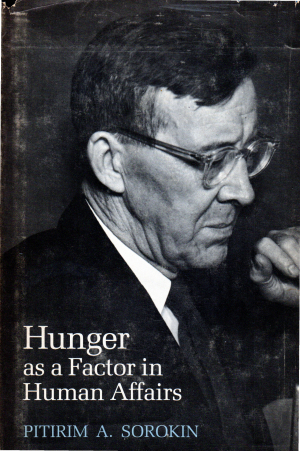
“Denies U.S. Recognition Will Bring Soviet Trade” (article by Sorokin, Washington Post, 1922)


‘Denies U. S. Recognition Will Bring Soviet Trade’ (by Sorokin) – Washington Post 4-26-1925

333 ‘Denies U. S. Recognition Will Bring Soviet Trade’ (by Sorokin) – Washington Post 4-26-1925


Denies U.S. Recognition Will Bring Soviet Trade

By Pitirim Sorokin

The Washington Post

April 26, 1925, pg. 3


The entire article is posted (above) as a PDF file and in my own transcription as a Word document.


posted by Roger W. Smith

“Winchester Hillside Aglow With Azaleas, Grown by Harvard Professor”


‘Winchester Hillside Aglow with Azaleas’ – Boston Globe 5-23-1954


Posted here (above) as a PDF file:

“Winchester Hillside Aglow With Azaleas, Grown by Harvard Professor,” by George Talomis, Boston Globe, May 23, 1954, pg. A32

An article about Sorokin’s famous garden in his yard in Winchester, Massachusetts.


— posted by Roger W. Smith

      March 2018