“A Sociologist’s Political Memories”


review of Leaves from a Russian Diary – Chicago Evening Post 1-30-1925


Posted here:

“A Sociologist’s Political Memories”

review of Sorokin, Leaves from a Russian Diary

reviewed by Lawrence Martin

The Chicago Evening Post Literary Review

January 30, 1925


*****************************************************

a “footnote”

I read Sorokin’s Leaves years ago, after “discovering” him. It was the second Sorokin book I read (after The Crisis of Our Age). It was unforgettable; it made a very strong impression of me.

This review conveys the excitement that the book conveyed. And it hints at some of its weaknesses, which I would say are those of a lot of good storytellers: a tendency at times to exaggeration and of, at times, “polishing the apple,” which is to say “prettying” incidents for effect.


— posted by Roger W. Smith

     February 2024

a visit to 8 Cliff Street


On May 24, 2017, on a trip to Massachusetts, I made a stop in Winchester (a town near Cambridge), where Pitirim A. Sorokin, his wife Elena, and their sons lived. Both of Sorokin’s sons graduated from Winchester High School.

I know the area well, having grown up in Cambridge. My father grew up in nearby Arlington. A musician and piano teacher, he had many piano students in Winchester and was involved in musical productions there.

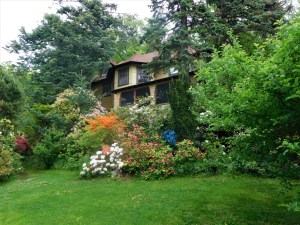
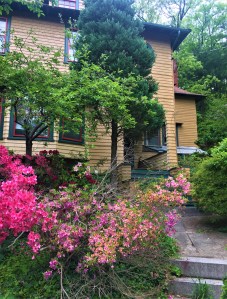
Sorokin and family resided at 8 Cliff Street in Winchester.

I was interested not only to see the residence of a world renowned scholar and writer, but also to see the house because it was famous for its grounds: a garden developed and maintained by Sorokin himself, for which he had won awards from horticultural societies and of which he was proud.

I drove up the block, which was on a steep ascent, using GPS to guide me. The GPS system advised me that I had arrived at my destination, 8 Cliff Street, on my left. I saw 6 Cliff Street, but where was number 8? Number 8 was shrouded and hidden by a profusion of flowering bushes. It reminded me of the Forest of Thorns in “Sleeping Beauty.”


‘Winchester Hillside Aglow with Azaleas’ – Boston Globe 5-23-1954


— posted by Roger W. Smith

      February 2024


*****************************************************

Pitirim A. Sorokin residence, 8 Cliff St., Winchester, MA. Photographs by Roger W. Smith

post updated


Sorokin, “The Bard of Life” (Walt Whitman 1819-1892)

Yuri Doykov, ” ‘Modern Thought of P. A. Sorokin”


Yuri Doykov, ‘Modern Thought of P. A. Sorokin’


posted here (PDF above)

Yuri Doykov

” ‘Modern Thought of P. A. Sorokin”

Arkhangelsk, 1995

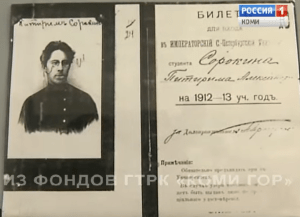
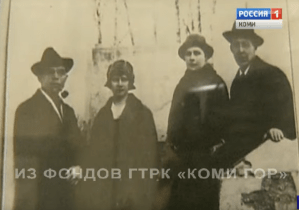
a few photographs


Nikolai Kondratiev and wife (left); Sorokin and Elena (right); in Minnesota

Dr. Sergei P. Sorokin

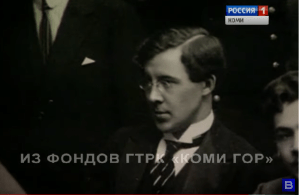
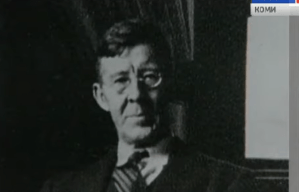
an early photo


Sorokin seated on left

Adolfo Posada, “Ética y sociología de la revolución”; “Sociología y ética de la revolución”; La Nación, 1925 (re Sorokin’s The Sociology of Revolution)


Nov 1 1925

Dec 6, 1925

Posada,’La Lamma Intima’


Posted here (PDFs above)

Adolfo Posada

Ética y sociología de la revolución

La Nación

November 1, 1925


Adolfo Posada

Sociología y ética de la revolución

La Nación

December 6, 1925


*****************************************************

I have transcribed and translated both articles, which are posted here:


the original Spanish

November 1 SPANISH

December 6 SPANISH


English translations by Roger W. Smith

November 1 ENGLISH

December 6 ENGLISH


*****************************************************

Adolfo González-Posada y Biesca (1860-1944) was a Spanish jurist, sociologist, translator, writer and politician linked to regenerationism. He was Professor of Political Law the Universidá Complutense de Madrid

Regenerationism was an intellectual and political movement in late nineteenth and early twentieth century Spain. It sought to make objective and scientific study of the causes of Spain’s decline as a nation and to propose remedies. It is largely seen as distinct from another movement of the same time and place, the Generation of ’98. While both movements shared a similar negative judgment of the course of Spain as a nation in recent times, the regenerationists sought to be objective, documentary, and scientific, while the Generation of ’98 inclined more to the literary, subjective and artistic. (Wikipedia)

La Nación was a Spanish newspaper published in Madrid between 1925 and 1936. During the dictatorship of Primo de Rivera, the newspaper was the central organ of the Patriotic Union and also served as the “official” newspaper of the regime. (Wikipedia)

*****************************************************

Acknowledgment:

I wish to thank Lindsay A. Stokalko, Archives Specialist, University Archives and Special Collections, University of Saskatchewan, for procuring this article from the Sorokin archives, and for overseeing photocopying of the document, which presented difficulties. Some Spanish archive presumably has copies of La Nación, but I was unable to find or obtain them anywhere else; and I doubt that Sorokin scholars have seen these articles before.


— posted by Roger W. Smith

     September 2023

Sorokin on peace


Sorokin on peace


With considerable effort, I have compiled (Word document above) a compendium of writings by and about Sorokin related to world peace and nuclear disarmament.


— Roger W. Smith

     July 2023

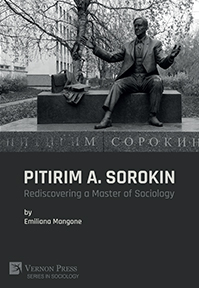
Pitirim A. Sorokin: Rediscovering a Master of Sociology


The following monograph has just been published:

Pitirim A. Sorokin: Rediscovering a Master of Sociology

by Emiliana Mangone

Vernon Press, 2023

More information is available at

https://vernonpress.com/book/1812


The following is a synopsis by Olga A. Simonova, Academic Supervisor of the School of Sociology at the National Research University, Higher School of Economics, Moscow, Russia:

This book is a historical and sociological study of the ideas of the outstanding Russian American sociologist Pitirim Sorokin. In a relatively small book (which is its undoubted virtue), his ideas are presented in a clear manner, along with biographical facts. The book consists of three parts and eight chapters. At the beginning, we are introduced to a biographical lapidary sketch, which the author justifiably divides into two main parts – the Russian period and the American period, which is not a simplification but makes the perception of the development of the social thinker’s ideas clearer and more coherent. Then some works of the American period are disclosed, including very controversial ones, including the general theory of socio-cultural dynamics by Sorokin, which is one of the most important theories of cultural development in the twentieth century. In the third part, the author considers Sorokin’s ideas, first of all, those of altruistic love, in the context of global problems, conflicts, and catastrophes.

The book is valuable for the younger generation of sociologists, as it addresses the rediscovery of the ideas of the classic sociology, which have been undeservedly forgotten or ignored in research and publications. In this way, the book contributes to the continuity of sociological theory and sociological education. Today Sorokin’s ideas have become relevant and even topical again since Sorokin, as the author points out, was formed as a scholar in an era of social upheaval in Russia and became a prominent theorist of revolution and

humanitarian catastrophes and at the same time a scholar who passionately sought a way out of the crisis of modern civilization through a revival of altruism and brotherly love. Throughout the book Emiliana Mangone solves several sociological “puzzles”: why the Russian-born social thinker had such an impressive career, why he remained a “stranger” in American sociology, why he turned to “positive” social phenomena – solidarity, altruism, brotherly love, friendship, the revival of spiritual values – even though he witnessed dramatic social and political events.

The book is a truly fundamental study – it fully and clearly presents Sorokin’s theory and methodology in the form of an integral picture of culture and society and a mixed integral method of research, establishes the connection between Sorokin’s ideas and other sociological traditions, reveals interesting biographical facts (in particular, in a very interesting chapter on Sorokin and Talcott Parsons’s relations, which are considered not in terms of sympathy and antipathy but in terms of development of sociological knowledge and institutionalization of the discipline), and is based on the most important sources on Sorokin’s work.

The author of the folio observes all the norms of academic ethics and neutrality, so the book is genuinely interesting. Much about Sorokin’s work and his biography is already known, but the book is of interest to Russian researchers, too, who often miss the details of the American period of his career. The fundamental novelty of this book is the consideration of Sorokin’s work in the contemporary global context – global crises, epidemics, and war, which is obviously necessary for all and not only for sociologists.
National Council of American-Soviet Friendship, “Open Letter to the American People on American-Soviet Friendship”


Corliss Lamont, ‘Open Letter’ (2)


Posted here:

Open Letter to the American People on American-Soviet Friendship

Introduction by Corliss Lamont

New York: The National Council of American-Soviet Friendship, 1943

Sorokin was one of the signers. His Russia and the United States was published in 1944.

Corliss Lamont (1902-1995) was an American socialist and advocate of various left-wing and civil liberties causes. He was Chairman of The National Council of American-Soviet Friendship, which was founded in 1943.


— posted by Roger W. Smith

      May 2023