‘Pitirm A. Sorokin’ – Harvard Univesity Gazette 12-28-1968
Posted here (PDF above):
“Pitirim A. Sorokin”
Harvard University Gazette
December 28, 1968
— posted by Roger W. Smith
October 2024
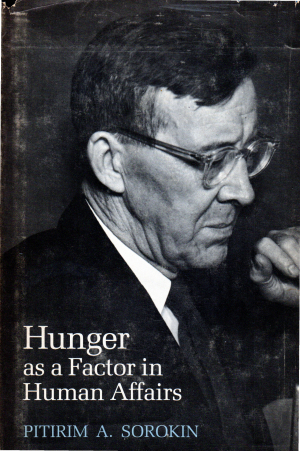
‘Pitirm A. Sorokin’ – Harvard Univesity Gazette 12-28-1968
Posted here (PDF above):
“Pitirim A. Sorokin”
Harvard University Gazette
December 28, 1968
— posted by Roger W. Smith
October 2024
1 ‘distinguished guests will deliver lectures’ – Harvard Crimson 3-19-1929
2 ‘new solution to social problems predicted by Sorokin’ – Harvard Crimson 3-26-1929
3 ‘Famous Russian Sociologist May Come to Harvard’ – Harvard Crimson 11-2-1929
4 ‘Sorokin accepts post on Harvard faculty’ – Harvard Crimson 1-14-1930
5 ‘Sorokin comes to Harvard to head field of sociology’ – Harvard Crimson 10-8-1930
6 ‘Sorokin finishes new collaborative work’ – Harvard Crimson 11-25-1930
7 ‘sociologists to attend New York convention’ – Harvard Crimson 4-12-1931
8 ‘Sorokin is nominated for council of sociology group’ – Harvard Crimson 4-28-1931
9 ‘Professor Sorokin satisfied with new sociology division’ – Harvard Crimson 10-18-1931
10 ‘sociologists top rest of college in mid-year marks’ – Harvard Crimson 3-4-1932
11 ‘The Dunster House Forum’ – Harvard Crimson 4-26-1932
12 ‘animal collective life is subject of new course’ – The Harvard Crimson 9-26-1932
13 ‘war is 2,000 times worse than in medieval time’ – Harvard Crimson 9-28-1933
15 ‘Harvard Communist refuses to prostitute truth for advertisements’ – Harvard Crimson 2-21-1935
16 re Journal of Rural Sociology (Sorokin among editors) – Harvard Crimson 2-11-1936
17 ‘Sapped Vigor’ (re sociology dept) – Harvard Crimson 5-23-1936‘
18 ‘Haigis Endorsed by Thirteen Professors’ – Harvard Crimson 10-13-1936
19 re 1936 election – Harvard Crimson 10-13-1936
20 re Sorokin response to faculty critics of Dynamics – Harvard Crimson 12-15-1937
21 ‘Professors Attack War” – Harvard Crimson 2-18-1938
22 ‘Kerensky Puts Faith in Democracy’ – Harvard Crimson 3-10-1938
23 ‘American Culture in Era of Change, Sorokin declares’ – Harvard Crimson 11-2-1938
24 students sign petition for practical sociological course – Harvard Сrimson 1-10-1939
25 Sorokin receives petition for marriage course – Harvard Crimson 1-13-1939
26 re ‘Time Budgets of Human Behavior’ – Harvard Crimson 2-1-1939
27 ‘Bridgman Bans Fascists’ – Harvard Crimson 2-24-1939
28 ‘Faculty Men Support Bridgman’ – Harvard Crimson 2-25-1939
29 editorial re Bridgman ban on totalitarian scientists – Harvard Crimson 2-25-1939
29a ‘Sorokin Says New Union Proposals Are Totalitarian’ – Harvard Crimson 3-11-1939
30 ‘Professor Sorokin Criticizes Particulars of Tenure Report’ – Harvard Crimson 5-29-1939
30a ‘Sorokin Criticizes Particulars of Harvard Tenure Report’ – Harvard Crimson 5-29-1939
31 Sorokin says he prefers unjust peace – Harvard Crimson 10-28-1939
33 ‘Gorgeous Girls Offer Aid in Sorokin Admisison Plan’ – Harvard Crimson 11-25-1940
34 ‘Sorokin Plans Temptations for Ideal Entrance Exam’ – Harvard Crimson 11-29-1940
35 re Sorokin’s views on astrology – Harvard Crimson 1-24-1941
36 ‘Tenure Pot Boils Again’ – Harvard Crimson 3-21-1941
37 Faculty Profile (Clifton Fadiman) – Harvard Crimson 4-22-1941
38 review of The Crisis of Our Age – Harvard Crimson 11-3-1941
39 Sorokin to speak at Free French rally – Harvard Crimson 11-10-1941

41 Sorokin opposes plan to create a race of synthetic Germans – Harvarad Crimson 4-17-1942
42 Disney, Hooten – Harvard Crimson 2-4-1943
43 ‘No Double Cross by Russia, Says Sorokin’ – Harvard Crimson 4-23-1943
44 ‘Sorokin Foresees Decadence in Morale by Father Draft’ – Harvard Crimson 4-27-1943
45 Sorokin thinks Harvard men immune to co-ed temptations – Harvard Crimson 12-10-1943
46 Sorokin to lecture on Russia in postwar era – Harvard Crimson 8-29-1944
47 ‘Sorokin hits Hayek thesis’ – Harvard Crimson 4-13-1945
48 ‘newly-formed group to hold first meeting’ – Harvard Crimson 4-10-1945
49 re meeting – ‘is a planned economy the road to serfdom’ – Harvard Crimson 4-10-1945
50 Allport, Sorokin, Cherrington on San Francisco peace conference – Harvard Crimson 5-1-1945
51 ‘European Age at Its Close, Says Sorokin’ – Harvard Crimson 6-21-1945
52 Sorokin to speak at forum on Russia’s international aims – Harvard Crimson 10-2-1945
53 Sorokin speaks at forum; sees little hope for humanity – Harvard Crimson 12-14-1945
]54 ‘West going to dogs.’ says Sorokin (not so, rebuts Aiken) – Harvard Crimson 12-4-1946
55 ‘Rally Will Attack Draft, UMT Plans’ – Harvard Crimson 3-19-1948
56 ‘Faculty Members Attack Mundt-Nixon Anti-Red Bill’ – Harvard Crimson 5-22-1948
57 Sorokin, Kemble debate cultural signifiance of science – Harvard Crimson 11-5-1948
58 values for modern man discussed by Sorokin – Harvard Crimson 3-4-1949
59 Selfish World Doomed, Sorokin Says – Harvard Crimson 3-17-1950
60 ‘Sorokin, Aiken to Discuss Role of Modern Scientist’ – Harvard Crimson 10-27-1950
61 ‘students as happy now as in old days, Sorokin claims’ – Harvard Crimson 10-31-1950
62 friendship survey conducted under Sorokin’s guidance – Harvard Crimson 11-9-1950
63 professors debate foreign policy; Sorokin calls for disarmament – Harvard Crimson 3-28-1951

65 Porter Sargent obit – Harvard Crimson 3-28-1951
66 Sorokin attacks Parsons for failure to credit him – Harvard Crimson 12-12-1951
67 ‘Parsons calls Sorokin controversy on book’s similarities oversight’ – Harvard Crimson 12-13-1951
68 Sorokin decries Universal Military Training – Harvard Crimson 1-31-1952
69 Sorokin sponsor Students against Universal Military Training – Harvard Crimson 2-4-1952
70 ‘Pacifist Council Organizes’ – Harvard Crimson 2-16-1952
71 Sorokin declines to act as sponsor of Harvard Peace Council – Harvard Crimson 2-21-1952
72 ‘Thomas, Sorokin & Aiken Debate Declnie of Mortalty in U.S. Today’ – Harvard Crimson 11-8-1952
74 ‘America heading into sex anarchy,’ Sorokin says – Harvard Crimson 2-25-1954
75 ‘Revolutionary Gardener’ (profile of Sorokin) – Harvard Crimson 5-1-1954
76 Sorokin among judges in Miss Radcliffe contest – Harvard Crimson 10-2-1954
77 Sorokin statement, actions re McCarthy censure – Harvard Crimson 12-2-1954
78 Sorokin opposed to new Social Relations center – Harvard Crimson 1-13-1955
79 Sorokin Plans Group to Develop Love for Love’s Sake’ – Harvard Crimson 4-28-1955
80 Altruism Center Probes Five-Dimensional Love – Harvard Crimson 5-25-1955
81 Society for Altruism To Receive Charter – Harvard Crimson 11-29-1955
82 ‘The Empire Builder’ (faculty profile, Talcott Parsons) – Harvard Crimson 5-16-1956
83 ‘Prof. Sorokin’s $100,000 report on love’ – Harvard Crimson 5-22-1956
84 ‘Sorokin claims altruistic social change only hope for mankind’ – Harvard Crimson 12-12-1956
85 ‘Sorokin attacks U.S. for sexual attitudes’ – Harvard Crimson 2-4-1957
86 ‘Professors Request End of Arms Race’ – Harvard Crimson 11-16-1957
87 ‘Sorokin warns Sensate culture will end in total disintegration’ – Harvard Crimson 10-10-1958
88 ‘Prophet’ (Sorokin profile) – Harvard Crimson 10-15-1958
89 Sorokin on altruism studies, Harvard center – Harvard Crimson 3-17-1959
90 ‘University Professors Support Conference For Nuclear Ban’ – Harvard Crimson 4-17-1959
91 ‘Pitirim A. Sorokin’ (profile) – Harvard Crimson 11-5-1966
92 review of ‘The Harrad Experiment’ (Sorokin mentioned) – The Harvard Crimson 3-4-1967
93 ‘Pitirim Sorokin Is Dead at Age 79’ – Harvard Crimson 2-12-1968
94 ‘Talcott Parsons (1902-1979)’ – Harvard Crimson 5-18-1979
Posted here are articles about Sorokin in The Harvard Crimson.
— oosted by Roger W. Smith
July 2024
*****************************************************
addendum:
My father and older brother both graduated from Harvard College. My father took the courses Social Relations 1a and Social Relations 1b at Harvard during the 1948-49 academic year. Sorokin was not teaching them at the time. Social Relations 1a was taught by Gordon W. Allport. Social Relations 1b was taught by George Homans.
I grew up in Cambridge, Massachusetts, a few blocks from Harvard Square.
Professor Harry Aiken is mentioned in one of the Crimson articles. I took a course with Professor Aiken at Brandeis University.
I also took a sociology course with Professor Lewis Coser (not mentioned here) at Brandeis University. He knew Sorokin personally.
“There were other interesting ways in which intensity of feeling showed itself in irrational ways, showing how human good scholars can be.
“During my editorship of the ASR [American Sociological Review] the president of SSSP [The Society for the Study of Social Problems] sent in a proposed constitution for that organization, requesting that it be published in the ASR. Since the Review never had a policy of printing constitutions of other societies (or even that of the ASA!), the paper was returned. My reward was a denunciation in a Council meeting and a further drubbing in a letter to the president of ASA, with copies to various other leading sociologists.
“Even more absurd was a request from P.A. Sorokin, who demanded that I publish a statement accusing Talcott Parsons of plagiarism from Sorokin’s works. This was not the product of a reasonable mind; his principal argument was that Parsons had based a theory on the three elements of society, culture, and personality–an idea that was clearly in the public domain. On receiving a rejection, Sorokin responded with an angry letter, threatening to publish the statement elsewhere and to add that it had been refused by me, Editor of ASR. I terminated the correspondence by writing that if he did, he should add that the Editor had submitted the statement to every associate editor and that each one had recommended against printing it. I never learned if he attempted to publish it elsewhere.”
— “Recollections of a Half Century of Life in the ASA,” By Robert E. L. Faris, The American Sociologist, Vol. 16, No. 1 (February , 1981), pp. 51-52
— posted by Roger W. Smith
August 2021
Martindale and Mohan, ‘An Interview with Don Martindale’ – International Social Science Review’
Posted here as a PDF file:
Perspectives of a Contemporary Critical Realist: An Interview with Don Martindale
By Don Martindale and Raj P. Mohan
International Social Science Review
Vol. 58, No. 3 (summer 1983), pp. 142-154
Don Martindale was a professor of sociology at the University of Minnesota. Raj P. Mohan was a professor of sociology at Auburn University.
Martindale makes personal observations about and comparisons between sociologists such as Sorokin, Talcott Parsons, Robert Merton, and C. Wright Mills which some scholars may find interesting.
— posted by Roger W. Smith
August 2021
Posted here as a Word document are fascinating excerpts pertaining to Sorokin from History of Sociology at the University of Wisconsin-Madison; Volume 1: Challenges, Ups, and Downs, 1874-2016 by Russell Middleton (Madison, Wisconsin: Anthropocene Press, 2001).
*****************************************************
email from Russell Middleton to Roger W. Smith
August 22, 2018
Dear Mr. Smith:
I am happy to give you my permission to cite and quote from my discussion of the relationship between E. A. Ross and Pitirim Sorokin. Ross strongly disagreed with Sorokin’s view of the Soviet leaders, but he was taken in by Soviet propaganda. Nevertheless, he had great respect for Sorokin as a scholar and played a major role in helping him land a job at the University of Minnesota and later as chair of the Sociology Dept. at Harvard.
When I was a graduate student at Minnesota in 1951 there was a joke circulating among the sociology graduate students that Sorokin had read every book in the library. I almost came to believe it when I was looking for some good French sociology texts to use in practice for my French reading exam (which was required for the PhD then). In the stacks I pulled down some very old issues of L’année Sociologique, the famous French journal of Durkheim, Mauss, etc. I was startled to see that Sorokin was the last (and only) person who had checked out the volume in all the years since Sorokin had taught there.
When I run across people who argue that Lenin was a decent leader, in contrast with Stalin, I tell them to go read Sorokin’s autobiography.
Best wishes,
Russell Middleton
Prof. Emeritus of Sociology
University of Wisconsin-Madison
*****************************************************
I wish to thank Professor Middleton for giving me permission to post these excepts from his book.
— posted by Roger W. Smith
August 2021
[C. Wright Mills’s] The Sociological Imagination … was a collection of literary essays–some brilliant, others pedestrian-that permitted the profession to engage in the sort of self-analysis that too few people in the sociological positivism of the 1950s were prepared to engage in. True enough Pitirim Sorokin made a similar effort [in his Fads and Foibles in Modern Sociology and Related Sciences], but it was so laden with moral judgments and psychological mysticism that it could not penetrate to the heart of the issues raised by the dominant tendencies toward empiricism. Sorokin in his own distinct way, like [Talcott] Parsons, became captive to generalizations that were so rich in tautology and platitudes that we forgot how often devoid they were in specific reference points. [italics added]
— Irving Louis Horowitz, “C. Wright Mills, 1916-1962: Bright Lights and Dark Shadows,” Contemporary Sociology, Vol. 41, No. 4 (July 2012), pg. 415
*****************************************************
What I would be inclined to say is that the late Irving Louis Hortwitz, a distinguished American sociologist, made an excellent point — in this article about C. Wright Mills — about Pitirim A. Sorokin’s shortcomings as a scholar and writer. True, it was only a passing remark.
Horowitz was a student of Mills at Columbia University and edited two posthumous collections of Mills’s work. Note that he also found fault with the writings of Sorokin’s nemesis Talcott Parsons!
— Roger W. Smith
April 2019
Edward Tiryakian
“Brief Personal Recollection of Pitirim Sorokin”
At the start of my second year of graduate studies at Harvard University, I went to the office of the Director of Graduate Studies (who was then the noted psychologist Gordon Allport) to find out if I had been awarded a teaching fellowship. “yes!” answered his secretary, “I have good news and bad news for you.” She continued: “the good news is that you have indeed been given a teaching fellowship. The bad news is you will be assisting Professor Sorokin this fall.” This was in September 1953. After WWII, Pitirim Sorokin was relegated to teach only undergraduate studies, considered “out of date”, and except for a perfunctory single meeting with incoming students, he was studiously avoided by graduate students. We all knew about bad feelings between him and the Chairman of the new Department of Social Relations, Talcott Parsons.
To skip the details, after becoming his teaching fellow, I discovered what a great thinker and warm personality he was. Later on that semester, he invited my new bride and myself to visit him and his wife Elena at their Winchester home. This was a great honor for a graduate student. I still remember standing at his door nervously. The door opened with a smiling couple inside. Sorokin said, “Come in, come in and have a glass of champagne!”. He must have seen my perplexed look, and understood immediately, “Well, one must have the best of sensate culture!”. From then on until his death, we became close friends, and he appreciated the festschrift I organized in his honor when I was still an assistant professor at Princeton. That appeared in 1963 as “Sociological Theory, Values, and Sociocultural Change”, and I am delighted that 50 years later, it will be reissued by Transaction Publishers.
On a more sober note, if Sorokin felt bitter toward Parsons (who was also my thesis advisor, which put me in a difficult position), I think that besides some intellectual differences, there was a deep hurt involved. Sorokin had started the department of sociology in 1931, and attracted some of the brightest young minds in the profession, including Robert Merton (the best student he ever had, Sorokin told me once when I asked him). But before the end of the decade, they had moved from Sorokin to Parsons. Why?
Both were towering intellects, the best two theorists of the 20th century. As I reflect from personal contacts with both, Sorokin was brought up in the continental culture of the person with the encyclopedic knowledge gathered after prolonged study, and who lectures to a spell-bound audience. It is a privilege to hear him, but the audience is essentially a passive, appreciative audience. Parsons was trained in the American tradition of a seminar, where the intellectual leader interacts with students, giving them a sense of being proactive, not just reactive. That, I think, is why the top students in the department in the 1930s had “defected” and that caused pain to Sorokin and his bitterness to Parsons. In the presence of Sorokin, I felt I had very little to contribute that he did not already know; in the presence of Parsons, I felt that if I said something novel, that he had not thought about, that he would accept it willingly and try to incorporate it in his complex theoretical system. I have had my feet in both American and continental traditions, and so could appreciate being a student of both.
– posted by Roger W. Smith
January 2018
 Pitirim Alexandrovich Sorokin